

Isola di San Giacomo
VeniceIsola di San Giacomo:
The New Venue of the Sandretto Re Rebaudengo Foundation in Venice
Temporarily closed
A New Venue, A New Project
Isola di San Giacomo, located in the northern lagoon of Venice, is the new venue of the Sandretto Re Rebaudengo Foundation, a nonprofit institution for contemporary art founded in 1995. It joins the Foundation’s other locations: the Turin venue, opened in 2002 in a former industrial district of the city; Guarene, home to Palazzo Re Rebaudengo and its Art Park among the hills of Langhe and Roero; and its Spanish branch, which does not yet have a permanent venue but presents exhibitions in the capital through Fundación Sandretto Re Rebaudengo Madrid.
As with each of these locations, the identity of San Giacomo has developed in close relationship with its setting and is distinguished by a unique program, in dialogue with the local territory while remaining open to the international art scene and to the cultural routes that converge in Venice through the Biennales and the city’s rich exhibition offerings across public and private institutions.
Purchased in 2018 by Patrizia Sandretto Re Rebaudengo and Agostino Re Rebaudengo from Cassa Depositi e Prestiti, San Giacomo has been transformed into an innovative laboratory for art and sustainability.
“In this strip of land surrounded by water,” says Patrizia Sandretto Re Rebaudengo, President of the Foundation, “I immediately recognized a special place, suited to hosting exhibitions, artworks, and residencies—perfect for embracing the slow rhythms of artistic research and fostering dialogue and encounters among artists, theorists, and scholars from all disciplines.”As an integral part of the delicate lagoon ecosystem, the island has been reimagined to cultivate and develop ecological awareness and practices. In line with this vision, Agostino Re Rebaudengo, President of Asja Energy, explains: “San Giacomo was rescued from abandonment through a restoration project that went beyond architectural conservation, structuring the entire island as a circular economy ecosystem.”
The San Giacomo project thus weaves together, in a virtuous alliance, the cultural programming of the Sandretto Re Rebaudengo Foundation—with its thirty years of expertise—and the sustainability research activities of Asja Energy, a benefit corporation active for 30 years in renewable energy production and CO₂ emissions reduction.
The principles of environmental sustainability reinforce art’s essential role in promoting ecological awareness. Isola di San Giacomo represents a unique example in Italy of the relationship between biomuseology and conservation, consistent with the Italian Ministry of Culture’s guidelines for reducing the environmental impact of historic buildings and sites. It also aligns with the new museum definition proposed by ICOM in 2022, which describes museums as institutions “in the service of society” that, alongside traditional missions, “promote diversity and sustainability.”
An Open Island
San Giacomo now becomes a meeting place for artists, scholars, researchers, art audiences, and citizens.
At a time when many islands in the Venetian lagoon have progressively lost their public function, San Giacomo stands out as a virtuous example of environmental, artistic, and cultural restoration.
It is an open island: admission is free, and all pathways and spaces have been designed to be accessible to people with disabilities.
The continuous opening of the complex will be gradual. Initially, San Giacomo will be open during exhibition inaugurations held in conjunction with the Venice Biennales and for guided group visits by reservation.
An agreement has been signed with the City of Venice providing for an on-request stop at San Giacomo on ACTV Line 12 along the Murano–Burano route. A docking pier for vaporetto boats is currently under construction.
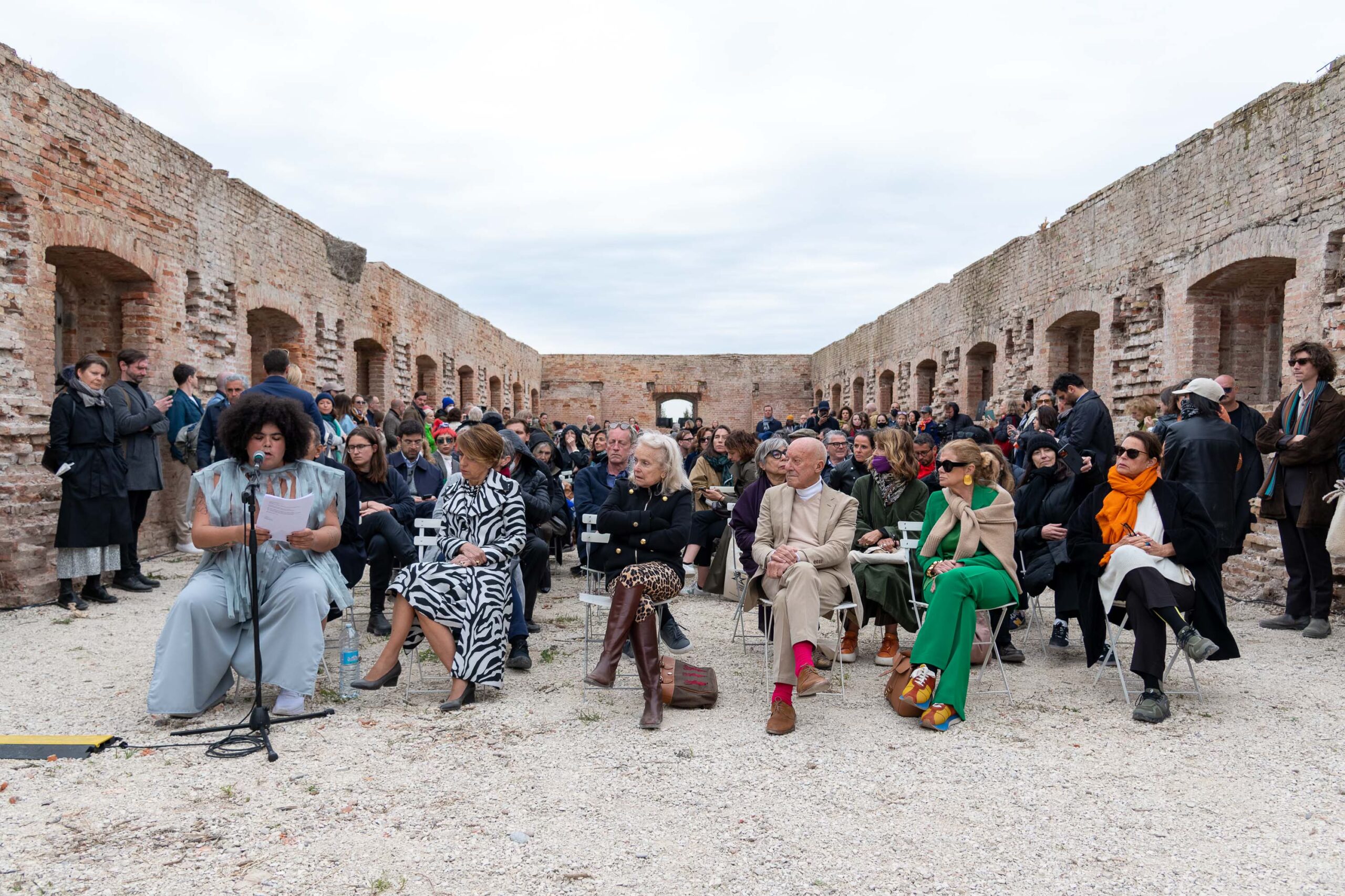
The island was first opened to the public in April 2022 for a performance by Jota Mombaça and, two years later, during Eun Me Ahn’s ceremonial blessing performance. The San Giacomo venue was officially inaugurated on May 7, 2026, with a rich program including:
- Fanfare/Lament (until September 12), Matt Copson’s solo exhibition curated by Hans Ulrich Obrist;
- Don’t Have Hope, Be Hope! (until September 12), a group exhibition featuring works from the Sandretto Re Rebaudengo Collection;
- San Giacomo Island 2022–2026, A Story in Images (until September 12), a selection of photographs by Giovanna Silva and Antonio Fortugno documenting the restoration works;
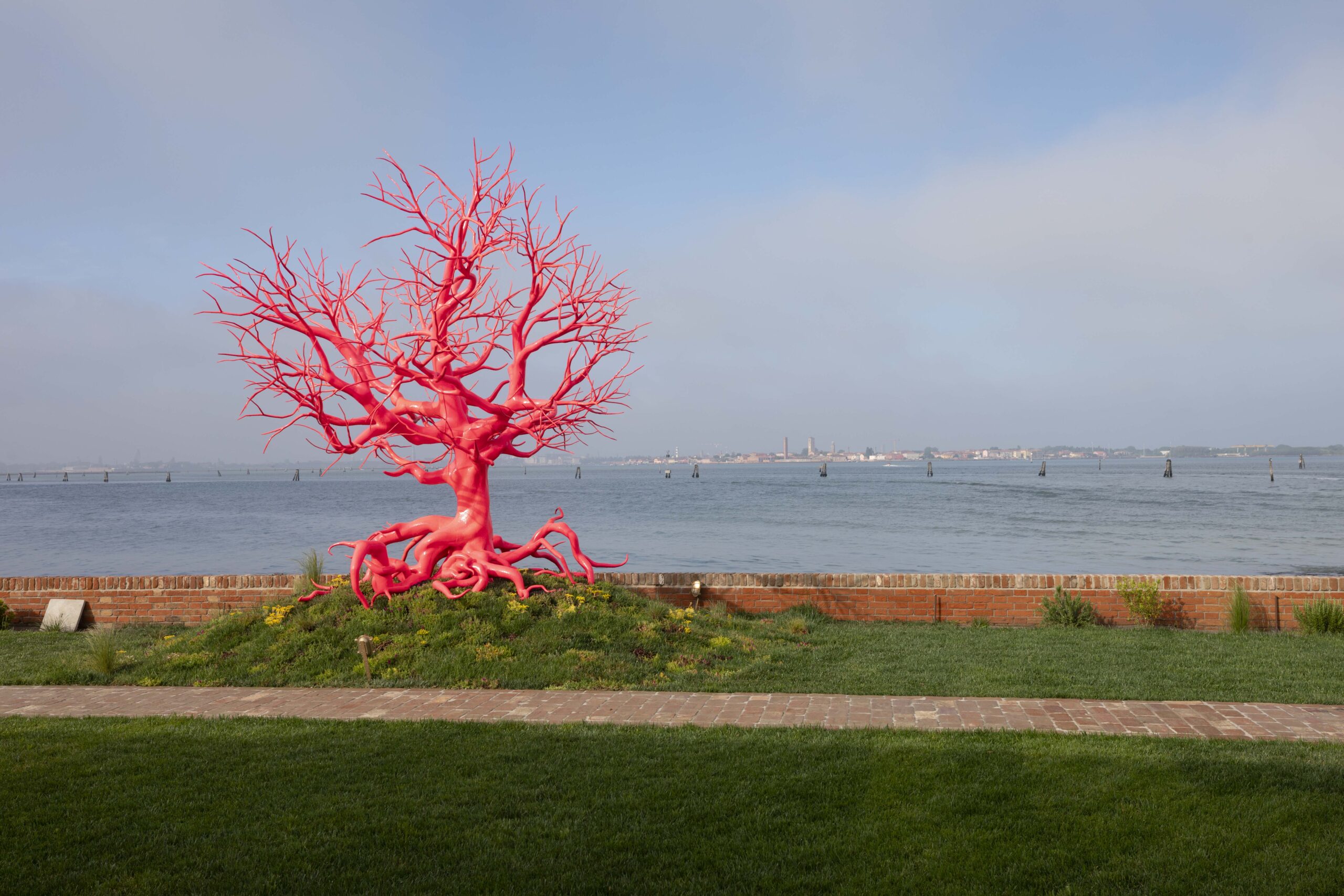
- The garden, with permanent installations by Claire Fontaine, Mario Garcia Torres, Hugh Hayden, Goshka Macuga, Pamela Rosenkranz, and Thomas Schütte.
The History of Isola di San Giacomo
In the heart of Venice’s northern lagoon, between Murano and Burano, lies an almost square-shaped island that for centuries has served as a place of passage, hospitality, spirituality, and defense.
San Giacomo is a fragment of lagoon history spanning nearly a thousand years of human and architectural events, and today it is the protagonist of a rebirth that renews an identity deeply rooted in the past.
In a lagoon crisscrossed since the Middle Ages by trade routes between Venice and the upper Adriatic, Doge Orso Partecipazio Badoer granted the island in 1046 for the construction of a monastery and a hospitale for pilgrims—a resting place open to travelers and sailors crossing the lagoon.
In later centuries, it became a women’s monastery: the Cistercian nuns, who lived there from 1238 to 1440, reclaimed the land, managed the waters, cultivated the soil, and developed forms of agricultural self-sufficiency, marking one of the island’s most prosperous periods.
After their departure around 1440, the island changed function again, first becoming a temporary plague hospital and later home to Franciscan friars.
A radical transformation came with Napoleon’s arrival in Venice in 1797, marking the beginning of Napoleonic rule, followed in the nineteenth century by Austrian domination. Under Napoleon, the monastery was demolished and San Giacomo was converted into a military outpost, later used by the Italian army.
Religious architecture gave way to powder magazines, weapons depots, and defensive structures.
After 1961, when military use ceased, the island entered a long period of abandonment: buildings swallowed by brambles, collapsed roofs, accumulated waste—a historical and environmental heritage gradually forgotten.
In 1975, during the Venice Theatre Biennale, Jerzy Grotowski chose this wild, overgrown place to rehearse and stage Apocalypsis cum figuris.
From the earliest phases, Venice’s Superintendency played a fundamental role in guiding the project with rigor and expertise.
Special thanks are due to the Superintendency’s architects Emanuela Carpani, Anna Chiarelli, and Fabrizio Magani, as well as Maria Rosaria Gargiulo, who as project manager made a decisive contribution to ensuring that both the restoration project and its implementation authentically interpreted the value of the Napoleonic buildings—protecting their identity without freezing it in time, and making possible a transformation respectful of the island’s history.
The City of Venice and the Veneto Region also worked constructively to ensure the successful completion of the restoration initiative.
The project is the result of long and complex work carried out by a multidisciplinary team with great passion and commitment.
The Asja team, coordinated by Fabio De Nardo, was supported by Alessandra Raso and Matteo Raso—who, in dialogue with the Superintendency, oversaw the drafting and authorization process of the project—and by Diego Massaro for structural engineering and safety coordination.
21.04.2022
Isola di San Giacomo
Curated by
Hans Ulrich Obrist
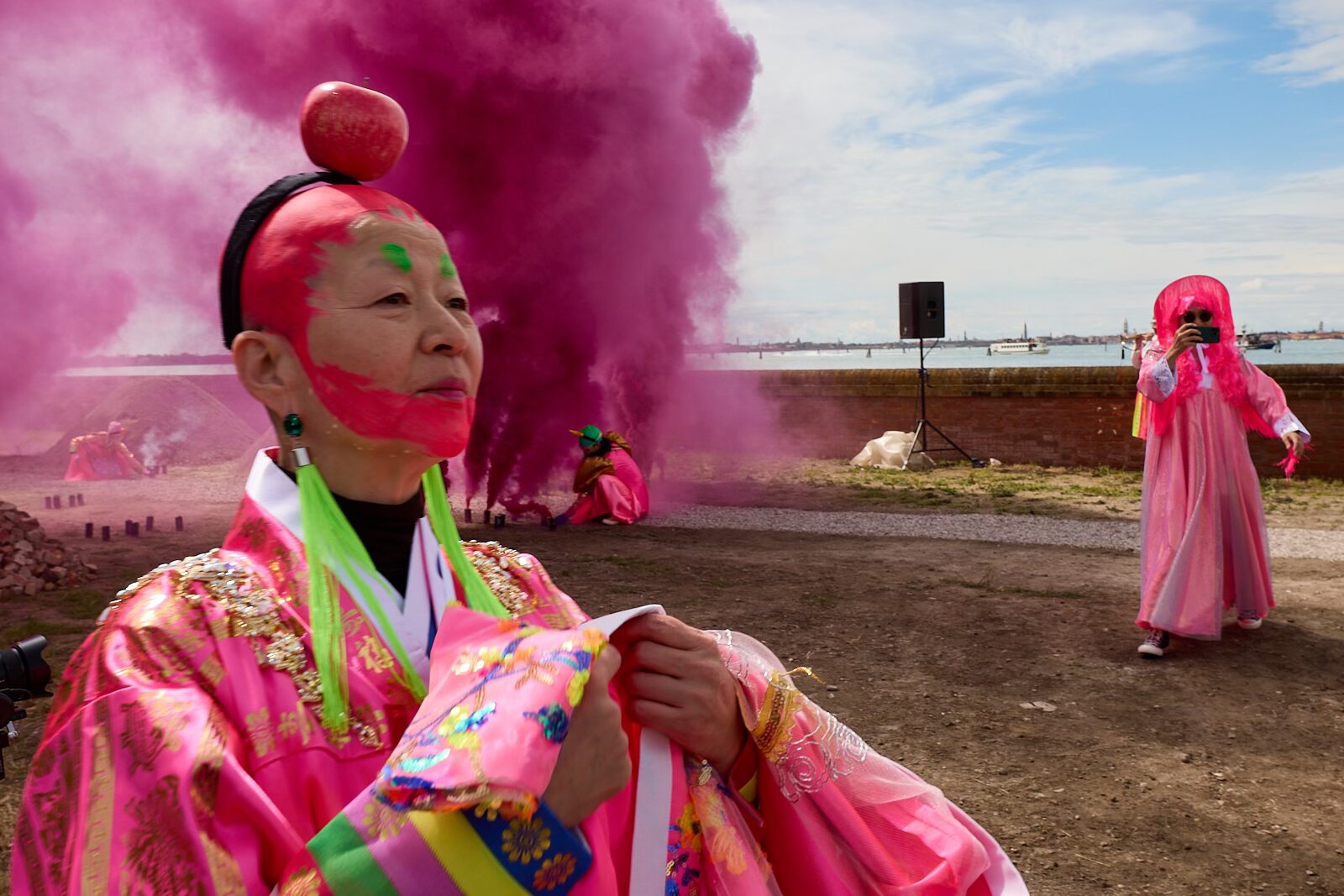
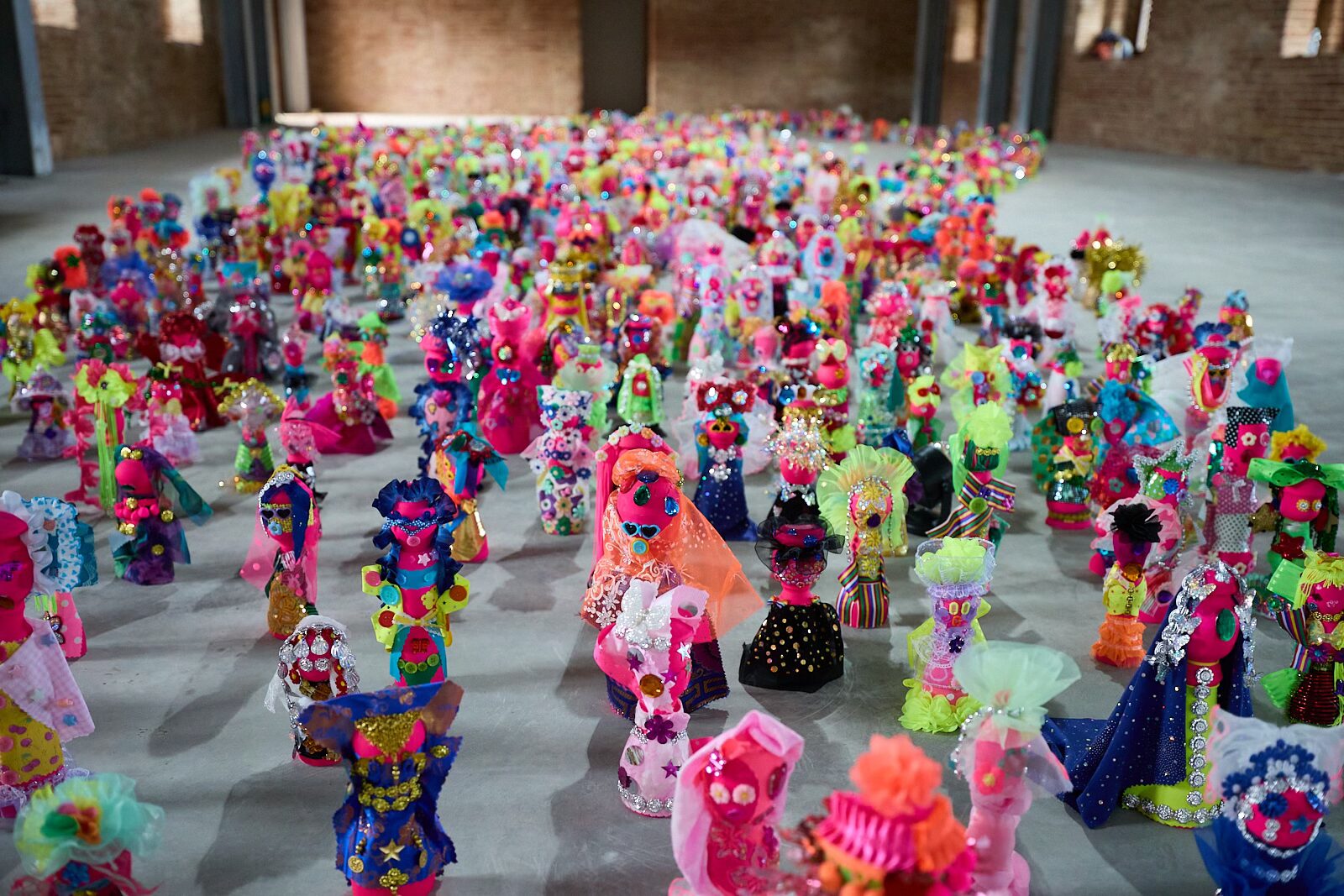
In 2024, Eun-Me Ahn presented the performance Pinky Pinky ‘Good’: San Giacomo’s Leap into Tomorrow, a transformative ritual inspired by Korean shamanic tradition, which celebrates the island’s past whilst embracing its new identity as a venue for contemporary art.
21.04.2022
Isola di San Giacomo
Curated by
Hans Ulrich Obrist
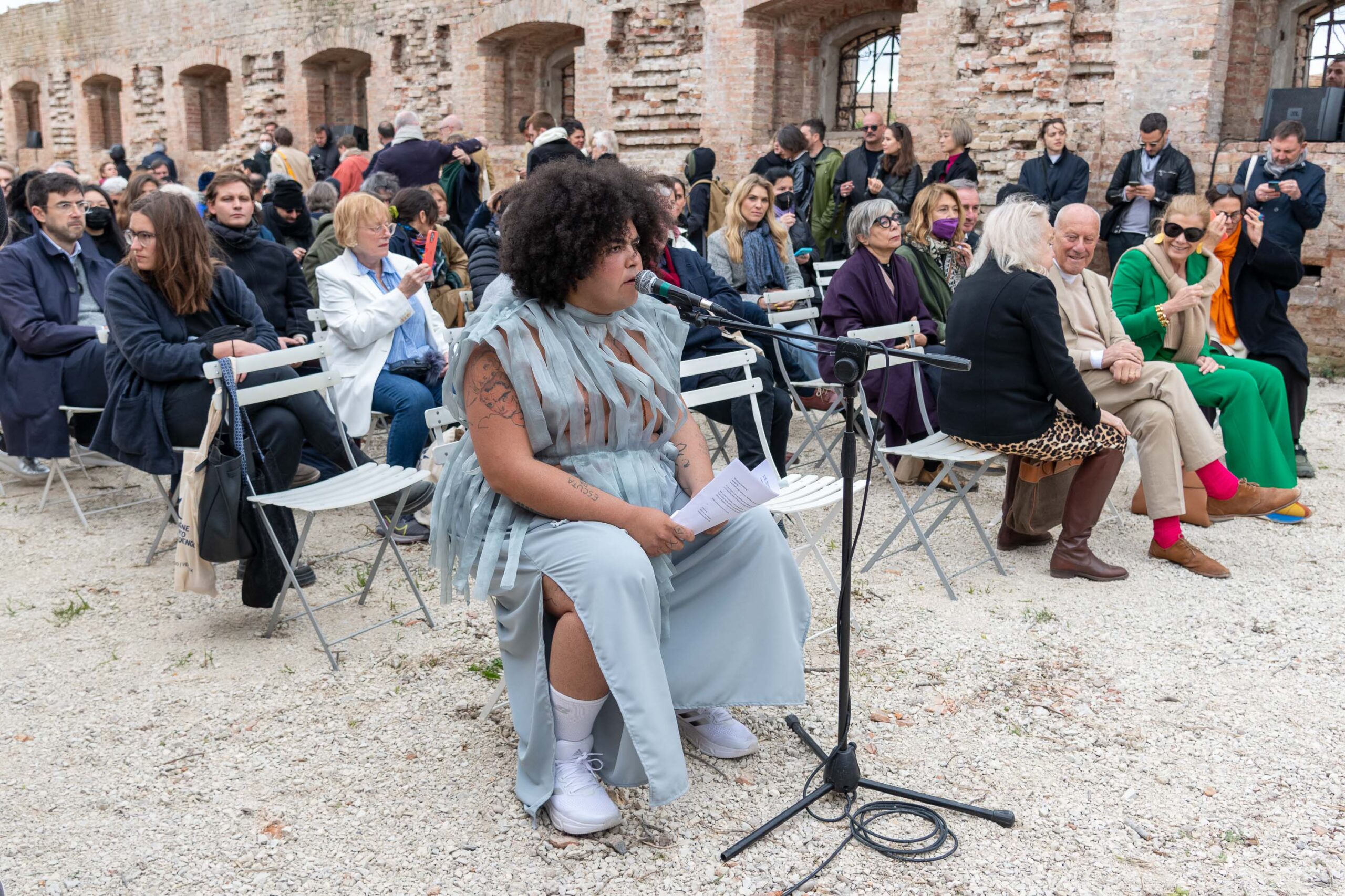
In 2022, Jota Mombaça’s performance The Tired Watering explored the dynamic qualities of water, the anxieties surrounding the climate and environmental crisis, and the awareness of the imminent threat of a potential global catastrophe.

“Finanziato tramite Avviso pubblico per la presentazione di Proposte di intervento per la rigenerazione culturale e sociale dei piccoli borghi storici, da finanziare nell’ambito del PNRR,Missione 1 "Digitalizzazione, innovazione, competitività e cultura", Componente 3 "Turismo eCultura 4.0" (M1C3), Misura 2 “Rigenerazione di piccoli siti culturali, patrimonio culturale,religioso e rurale”, Investimento 2.1 “Attrattività dei borghi”, finanziato dall’Unione europea - NextGenerationEU e gestito dal Ministero della Cultura”.
Subscribe to our newsletter for more news
Newsletter information