Like a careful explorer, Pierre Michelon ventures into territories forgotten by society. His reflection, focused on historical research and in particular on colonial history, unfolds through different media: writing, film, installations, and performances.
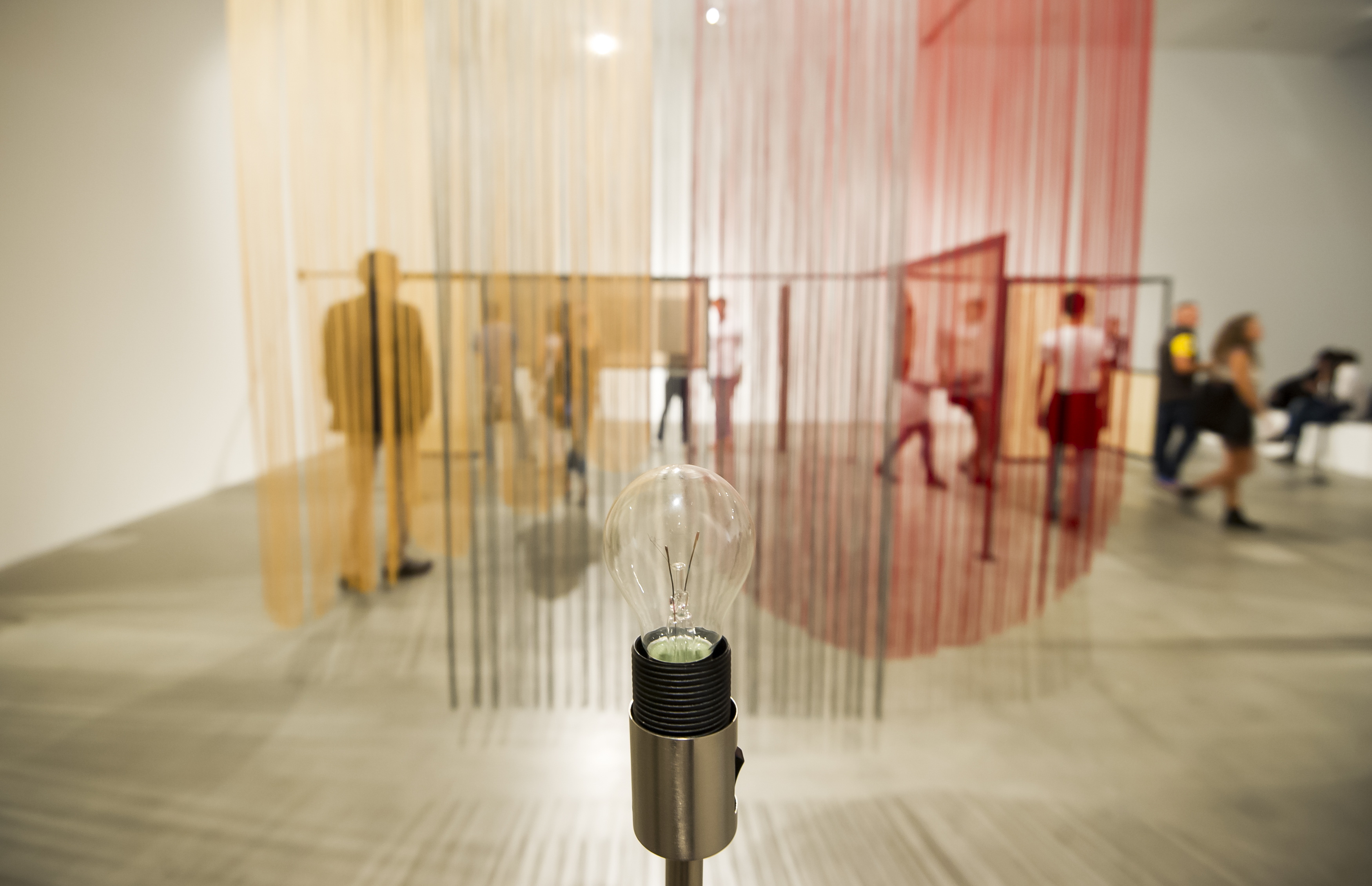
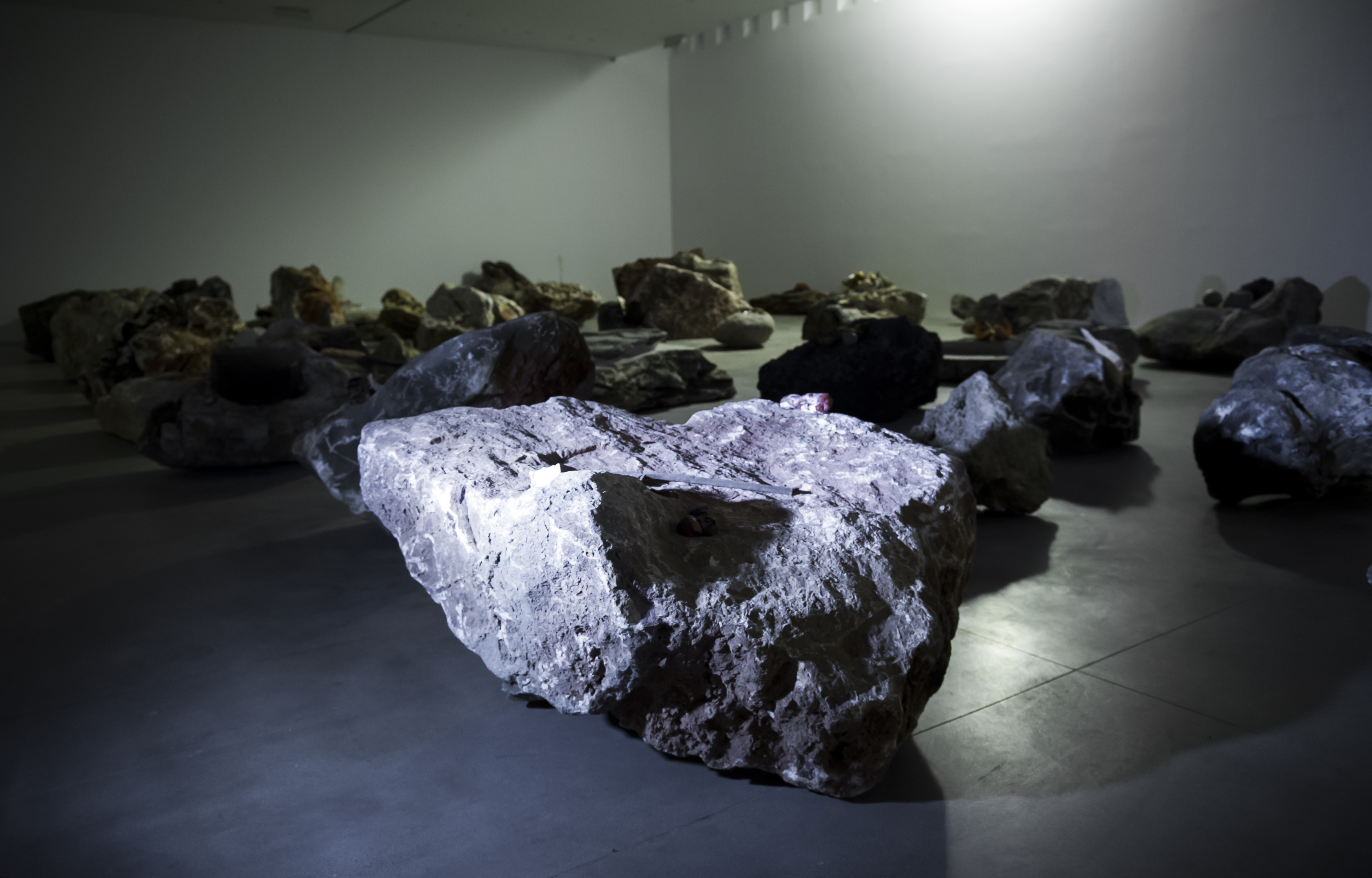
Parole e Angurie (Words and Watermelons) is the title of the exhibition and of the installation that the artist conceived and produced for the Foundation’s spaces, as the first step in a broader research project entitled Vanmélé (a Creole word from Guyana meaning “foreigner” or, poetically, “those who were created by different winds”). This project takes the form of a potentially infinite video-cartography, whose chapters assume, from time to time, the shape of a constellation, a map, or an atlas.
Starting from archival research carried out in historical archives—recovering testimonies, videos, articles, and letters—Pierre Michelon evokes in his work the harsh conditions (imprisonment, exile) of political prisoners deported by the French colonial empire, most of whom have left no trace behind. Using different narrative modes, Vanmélé maps their stories, with particular attention to the violence they suffered and to the repressed ideologies (pacifism, anarchism, communism, anti-colonialism), in order to draw connections between these struggles and history.
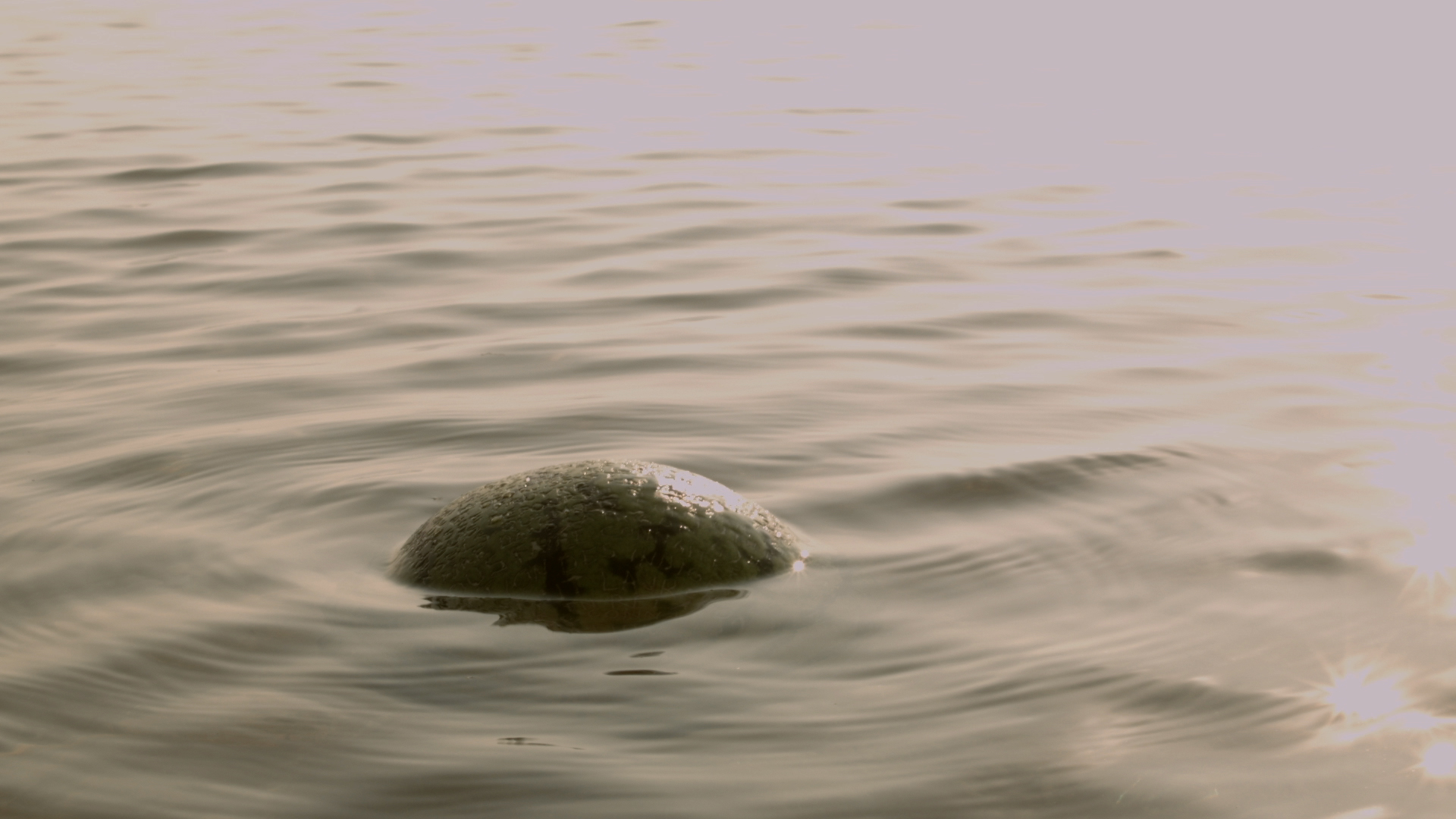
The dialogues taken from letters are at the core of the installation on view, appearing in the video or engraved on the rinds of watermelons. The artist chooses this fruit by drawing on the Vietnamese legend of An-Tiem, the sixth son of King Hung Vuong the Fifth: exiled to a deserted island for his disobedience, An-Tiem discovered these strange fruits and, by carving his name and his story into the watermelons and casting them into the sea, was eventually found and freed, also gaining the king’s clemency, who admired his intelligence and his ability to overcome hardship relying solely on his own strength.
By placing research on those who opposed French imperialism at the center of his work, Pierre Michelon initiates a profound re-reading of our collective past, offering a new perspective from which to observe the history of decolonization.
The Vietnamese legend of the watermelon
The legend tells that long ago the sixth son of King Hung Vuong the Fifth, An-Tiem, disobeyed his father’s orders and was therefore exiled to a deserted island. The prince had to build himself a shelter, dig a well for water, and fish and hunt in order to survive. One day he found a large, round green fruit like a ball. He cut it in half and saw that it was red inside, but he did not dare eat it, fearing it might be poisonous.
Days passed and the dry season arrived: it was so hot that all the plants withered and there was no longer any water to drink. One day An-Tiem was so tired and thirsty that he was forced to taste the fruit. He found it delicious and capable of quenching his thirst, and so he began to cultivate it around his home. Soon the entire island was covered with green fruits.
One day An-Tiem carved his name, the name of the island, and his story into some of these fruits and threw them into the sea. Later, some fishermen found these strange fruits, bearing An-Tiem’s name, floating on the water.
Soon stories about this delicious fruit reached the mainland, and many merchants sought to find the way to the island. Once they reached it, they transformed it from a deserted island into a populated one. The island was now bustling: many boats came and went. An-Tiem helped all those who wished to settle there, and soon this news reached the ears of the King.
King Hung Vuong was very proud to learn that he had a son who had been so brave and strong as to overcome difficulties without anyone’s help. An-Tiem was therefore immediately brought back to court. He took some of the fruits with him as an offering to the King, his father. The King gave him his crown, and An-Tiem became King Hung Vuong the Sixth.
From that moment on, the fruit known as dua hau became a symbol of good fortune, and to this day in Vietnam people offer it to relatives or friends as a token of good wishes for the New Year.
The Sandretto Re Rebaudengo Foundation, in collaboration with ENSBA – Lyon – École Nationale Supérieure des Beaux-Arts, presents the first solo exhibition in Italy by Pierre Michelon, an artist participating in the ENSBA – Lyon Postgraduate Programme. Born in Nantes in 1984, Pierre Michelon lives and works in Lyon and Nantes.